"2025 Digital RMB Technology and Application Forum and Global Digital Economy Benchmark City Construction Seminar" Successfully Held in Beijing
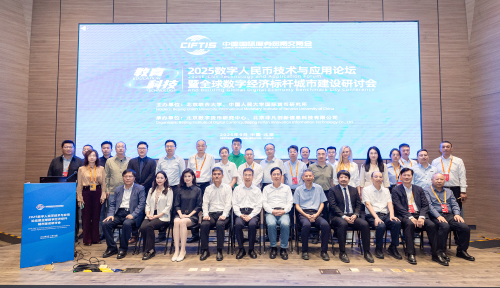
As an important professional forum of the China International Fair for Trade in Services (CIFTIS), the "2025 Digital RMB Technology and Application Forum and Global Digital Economy Benchmark City Construction Seminar" was successfully held on the morning of September 14 at Beijing Shougang Park. The forum was jointly organized by the Business College of Beijing Union University and the Monetary Research Institute of Renmin University of China, and hosted by the Beijing Digital Currency Research Center and Beijing Feifan Innovation Information Technology Co., Ltd. Experts and scholars from universities such as Peking University, Renmin University of China, National Taiwan University, and Beijing Film Academy, as well as representatives from institutions including the Wharton School Shanghai Center, Liaoning Liqin Economic and Trade Consulting Co., Ltd., Beijing Zhilian Technology Co., Ltd., Shanghai Bibi Information Technology Co., Ltd., and Beijing International Big Data Exchange, gathered together. Professionals from various fields of "government, enterprise, academia, research, and application" engaged in lively exchanges and in-depth discussions on cutting-edge issues related to currency, finance, and economic development.
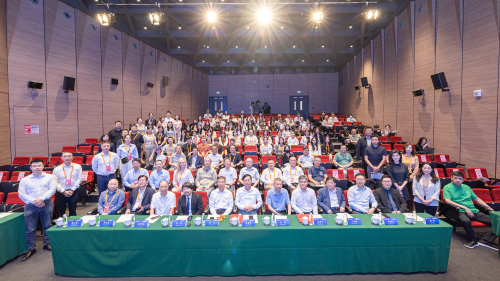
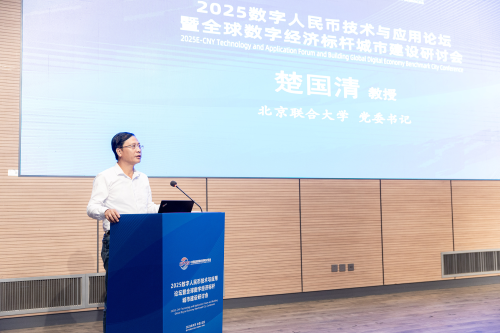
In his opening speech, Professor Chu Guoqing, Party Secretary of Beijing Union University, stated that President Xi Jinping emphasized in his congratulatory letter to CIFTIS the need to promote the high-quality development of trade in services. As a capital-based university, Beijing Union University, rooted in Beijing and serving national strategies, has held this forum for five consecutive years relying on the Digital Currency Research Center, forming a broad influence. The university will continue to promote the deep integration of government, industry, academia, research, and application, serving the digital economy and the construction of Beijing as an international consumption center city.
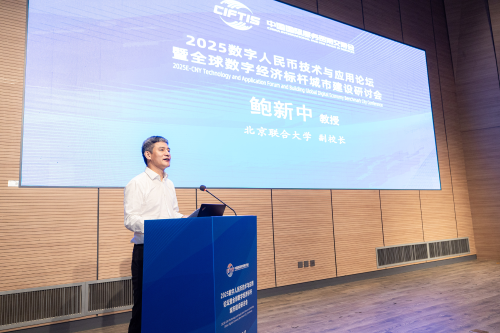
Professor Bao Xinzhong, Vice President of Beijing Union University, presided over the opening ceremony and pointed out that digital RMB, as an important direction of financial innovation, is having a profound impact on the digital economy and the international landscape. This forum focuses on technological innovation, scenario applications, and international cooperation, showcasing China's exploration achievements in the field of digital currency and providing new ideas for the development of the global digital economy. Professor Bao Xinzhong emphasized that this forum will promote exchanges and cooperation, driving digital RMB to better serve national strategies and capital construction.
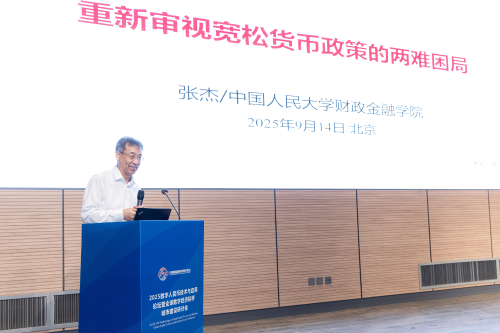
In the keynote speech session, Professor Jiang Jingjing, Dean of the Business College of Beijing Union University and Director of the Beijing Digital Currency Research Center, served as the host. Professor Zhang Jie from the School of Finance and Banking at Renmin University of China, in his speech titled "Re-examining the Dilemma of Loose Monetary Policy," pointed out that while loose monetary policy can play a role in crises, long-term reliance can easily lead to "shifting from the real to the virtual." It is necessary to adhere to limited growth and limited competition, maintain monetary policy neutrality, return to the function of financial intermediation, and better serve the real economy and sustainable development.
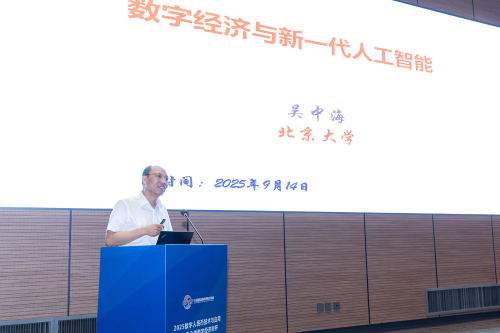
Professor Wu Zhonghai, Dean of the School of Software and Microelectronics at Peking University, emphasized in his speech "Digital Economy and New Generation Artificial Intelligence" that the digital economy has become an important opportunity for technological revolution and industrial transformation, with its development covering areas such as data valorization and industrial digitalization. The new generation of artificial intelligence, relying on the three elements of algorithms, computing power, and data, will play a key role in breaking the "data bottleneck" and promoting high-quality economic and social development.
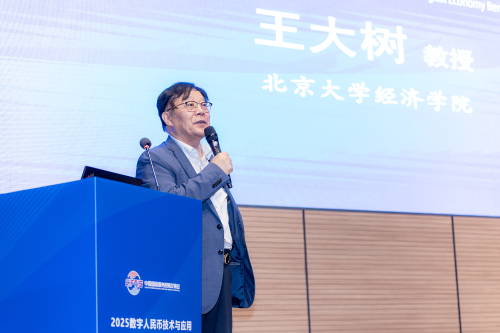
Professor Wang Dashu from the School of Economics at Peking University, in his speech "Several Issues Regarding Digital RMB," stated that digital RMB possesses traceable and targetable characteristics, enabling direct policy implementation in areas such as consumption voucher distribution and wage payments, thereby assisting in people's livelihood security. Its advantages in cross-border payments and smart contract applications will provide new momentum for macroeconomic regulation and the internationalization of the RMB.
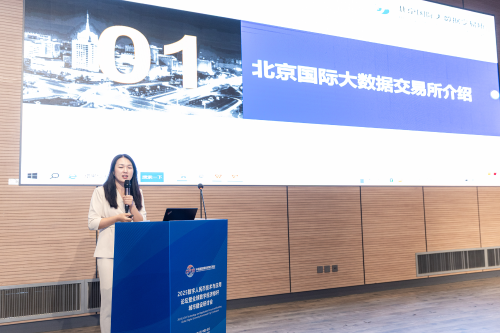
Sheng Jing, Head of the Innovation Standards Department at Beijing International Big Data Exchange, shared practical experiences in "Data Valorization Practice," introducing the explorations of the exchange in data circulation, asset registration, and transaction services. She pointed out that data valorization has formed a path from rights confirmation and inclusion in balance sheets, productization, assetization to full-process management, but challenges remain in governance, quality, valuation, and compliant application. With the improvement of policy systems, data elements will accelerate their transformation into new quality productive forces.
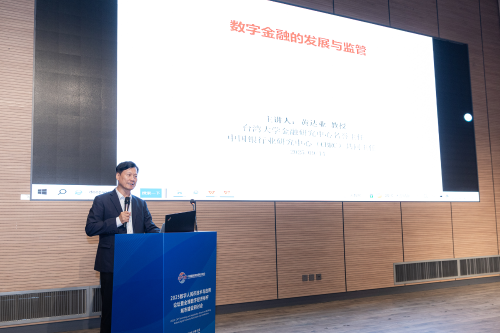
Professor Huang Daye, Honorary Director of the Financial Research Center at National Taiwan University, reviewed in his speech "Development and Regulation of Digital Finance" the regulatory models of the United States, the United Kingdom, Japan, the European Union, and Taiwan, China. He emphasized that digital finance is an important opportunity for China to achieve "overtaking on a curve," and should be used to promote the construction of a financial powerhouse and the formulation of international rules. Professor Huang Daye called for accelerating the cultivation of high-end financial talents, enhancing international financial discourse power, and winning sustained development momentum for China in global competition.
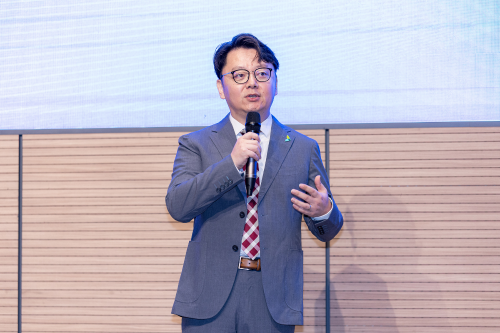
Professor Jiang Jingjing, Dean of the Business College of Beijing Union University and Director of the Beijing Digital Currency Research Center, pointed out in her speech "Can the Underlying Logic of Finance Change Because of Digital RMB?" that stablecoins are accelerating their development and integrating with the traditional financial system, demonstrating advantages in payment efficiency and cost. The United States leverages dollar stablecoins to strengthen its international currency status, while the exploration of offshore RMB stablecoins is expected to expand application scenarios, promoting digital currencies to play a greater role in global competition and cooperation.
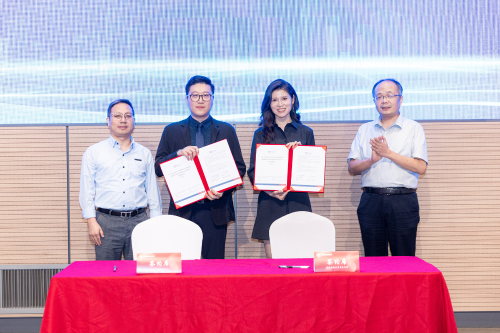
In the results release and signing session, the Business College of Beijing Union University signed a cooperation agreement with the Wharton School Shanghai Center of the University of Pennsylvania. The two parties will jointly launch the "Global Business Immersive Experience" course and jointly initiate the "Global Business Operations Challenge," providing students with opportunities for cross-cultural collaboration and international practical training.
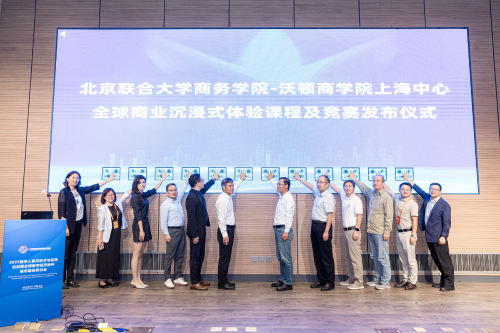
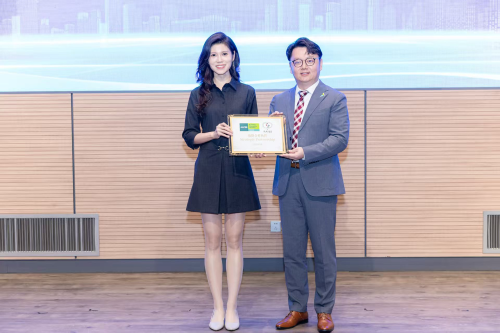
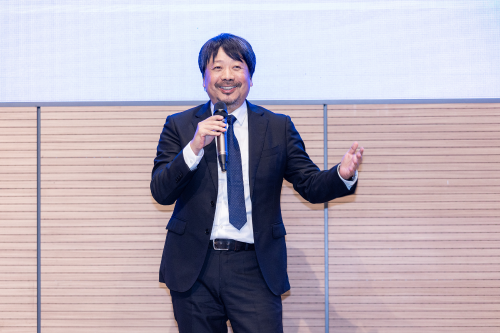
The Association to Advance Collegiate Schools of Business (AACSB International) presented a "Strategic Partnership" plaque to the "Research Alliance for Internationalization Development of Excellence Business Schools" initiated by the Business College of Beijing Union University, encouraging the Business College to continue making Beijing's contributions to enriching international business school construction standards and expanding certification effectiveness. Mr. Zhu Guiqiu, General Manager of Shanghai Bibi Information Technology Co., Ltd., stated that this strategic cooperation is of milestone significance and will inject new momentum into Chinese business education in areas such as international certification, scientific research cooperation, and talent cultivation.
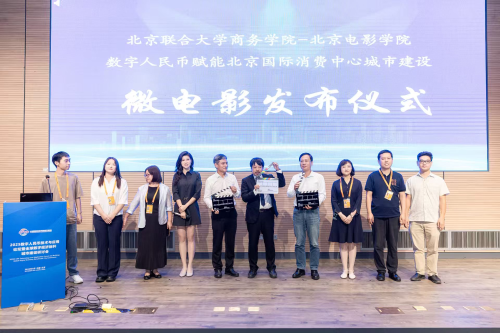
The Business College of Beijing Union University, together with Beijing Film Academy and Beijing Fashion Holding Group, released the microfilm "Digital RMB Promotes the Construction of Beijing as an International Consumption Center City," making new explorations in the Beijing practice of digital RMB.
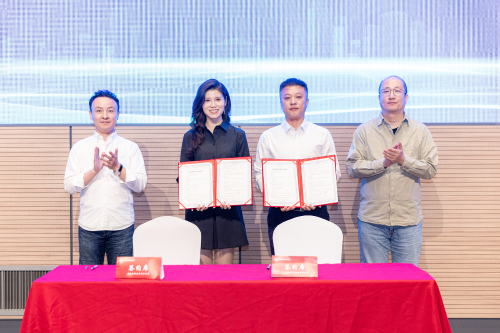
The Business College of Beijing Union University signed a "Strategic Cooperation Agreement on Co-construction of Cross-border E-commerce Comprehensive Pilot Zones" with Liaoning Liqin Economic and Trade Consulting Co., Ltd., jointly promoting the integration of industry and education and the cultivation of cross-border e-commerce talents. Mr. Wang Qiang, General Manager of the Northern Region Public Affairs Department of Alibaba's Taotian Group, stated that artificial intelligence and the digital economy will serve as engines to assist the high-quality development of the industry.
Mr. Liu Quanbao, President of Beijing Zhilian Technology Co., Ltd., released the "Achievements in the Integration of Digital Currency and Data Assets in the Era of Digital Economy," covering the simulation of multilateral bridge payments for central bank digital currency, a panoramic view of digital RMB popularization education, and a full-lifecycle management platform for data assets. He pointed out that the deep integration of digital currency and data assets is driving the optimization of enterprise management and the compliant use of data, while serving the integration of industry and education and the cultivation of digital economy talents, injecting new momentum into the digital economy.
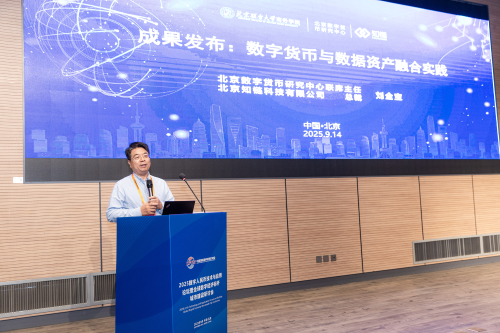
The forum concluded successfully under the witness of all guests. The "Digital RMB Technology and Application Forum," continuously organized by Beijing Union University, has now been successfully held for five sessions at CIFTIS. Over the past five years, the forum has continuously gathered domestic and international experts, scholars, and industry forces, promoting exchanges and cooperation in theoretical research, technological application, and practical exploration of digital currency, gradually developing into a professional brand with extensive influence. This forum not only deepened academic research and application innovation in digital currency but also contributed Chinese wisdom and Beijing's strength to the development of the global digital economy.
Academics - Events
- Programs
- Curriculum
Research - Research
- Social service
- Institutes
Student - Campus Life
- Support
- Alumni
Facilities & Resources - Library
- The Experimental Teaching Center
- Canteen
- Gymnasium
- Information Service